
Why Sweet Vape Flavors Feel Stronger in 2026 Flavor Experience Guide
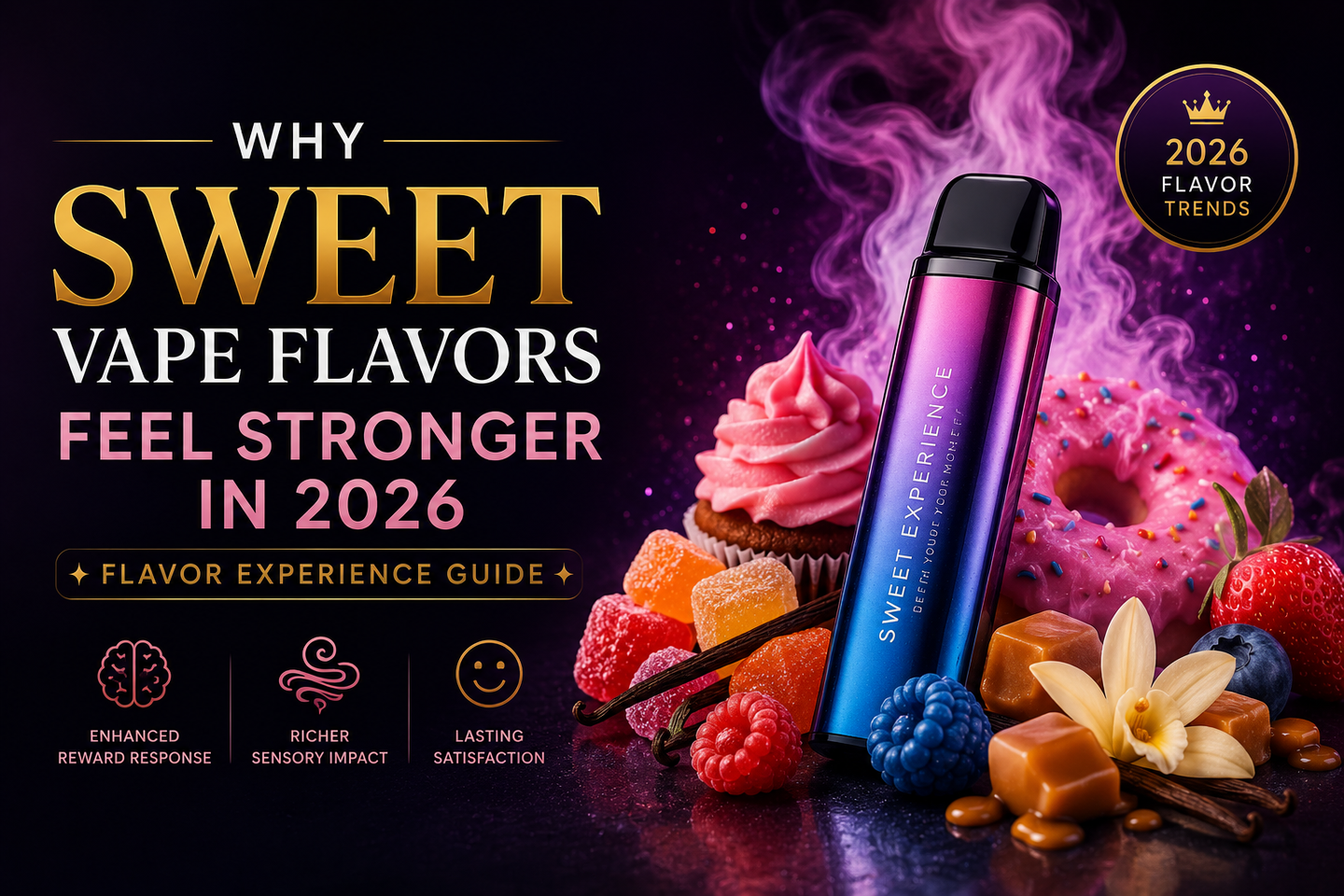
Sweet vape flavors have become one of the most recognizable characteristics of modern disposable vape devices. Many adult users describe sweet flavor profiles as feeling “stronger,” “richer,” or more noticeable compared to other flavor categories.
This sensation is not only related to sugar-style flavoring. It is influenced by a combination of flavor engineering, vapor production, airflow tuning, cooling balance, and psychological taste perception.
In 2026, vape manufacturers continue refining sweet flavor systems because they consistently attract user attention and increase overall satisfaction during vaping sessions.
How Flavor Perception Works in Vaping
Flavor perception in vaping is different from traditional food or beverage tasting. When users inhale vapor, the brain processes several sensations simultaneously:
- Sweetness intensity
- Cooling sensation
- Vapor warmth
- Airflow smoothness
- Flavor concentration
When these elements are balanced correctly, sweet vape flavors feel more powerful and satisfying compared to lighter or neutral profiles.
Why Sweetness Creates Stronger Flavor Impact
Sweet flavor compounds naturally stimulate taste receptors more aggressively than many other flavor categories. This creates a stronger sensory response during inhalation.
The brain also tends to associate sweet flavors with intensity and fullness, which increases perceived flavor strength even when nicotine levels remain unchanged.
This psychological effect is one reason sweet vape profiles dominate disposable vape sales across multiple product categories.
Role of Cooling Sensation in Sweet Flavors
Cooling additives play an important role in balancing sweet flavor intensity. Without cooling elements, many sweet profiles can feel too heavy during extended use.
Ice or menthol-style cooling systems help:
- Reduce sweetness overload
- Improve inhale smoothness
- Create cleaner aftertaste
- Enhance flavor clarity
This combination of sweetness and cooling sensation is why fruit ice profiles became so dominant in modern disposable vape devices.
Most Popular Sweet Flavor Categories
Several sweet flavor categories consistently outperform others due to their broad appeal and stronger taste perception.
Popular Sweet Flavor Types
- Blue Razz
- Strawberry Candy
- Watermelon Ice
- Mango Peach
- Cherry Lemon
- Cotton Candy blends
- Mixed Berry profiles
- Sweet mint combinations
These flavors are commonly found across leading disposable vape brands because they create immediate flavor impact and long-term user satisfaction.
Mesh Coil Technology and Sweet Flavor Delivery
Modern mesh coil systems are designed to improve flavor clarity and vapor consistency. Sweet flavors benefit significantly from mesh technology because even heating helps preserve flavor balance during long usage cycles.
Uneven heating can distort sweetness levels and create burnt or muted flavor experiences.
Advanced mesh systems improve:
- Sweetness consistency
- Vapor smoothness
- Flavor saturation
- Cooling stability
Why Sweet Flavors Feel Smoother
Sweet flavor formulations are often paired with nicotine salt systems designed for smoother inhalation. This creates a softer throat feel while maintaining strong flavor intensity.
As a result, users experience stronger taste perception without harshness.
This balance between intensity and smoothness is one reason sweet flavors remain highly popular among adult disposable vape users.
Airflow Design and Flavor Strength
Airflow engineering significantly impacts how sweet flavors are experienced. Tighter airflow systems concentrate vapor density, making flavors feel richer and more powerful.
Modern disposable devices are carefully engineered to optimize airflow for flavor-focused performance.
Brands Known for Strong Sweet Flavor Profiles
- Geek Bar – layered fruit sweetness and cooling balance
- Flum – smooth sweet flavor engineering
- Raz Vape – bold candy-inspired profiles
- Lost Mary – balanced sweetness and icy finish
- Mr Fog – high-capacity sweet flavor stability
- ELF BAR – globally recognized sweet fruit combinations
- Foger – strong flavor concentration systems
- HorizonTech – advanced vapor optimization technology
Why Sweet Flavors Perform Better in High Puff Devices
Sweet flavor systems are often optimized for high puff disposable devices because they maintain strong taste perception over longer usage periods.
Manufacturers carefully adjust sweetness intensity to ensure flavors remain enjoyable without becoming overwhelming during extended use.
Psychological Association With Sweetness
Sweet flavors trigger positive familiarity because they resemble candies, beverages, desserts, and fruit experiences that users already recognize.
This familiarity increases comfort and satisfaction, making sweet vape flavors feel more enjoyable and emotionally rewarding.
Sweetness vs Flavor Complexity
Not all sweet flavors are simple. Modern vape flavor engineering combines multiple layers of sweetness, cooling, tartness, and fruit notes to create deeper flavor experiences.
Complex flavor layering is now one of the defining characteristics of premium disposable vape devices.
Future Trends in Sweet Vape Flavor Engineering
Manufacturers continue developing more advanced sweetness systems designed to improve realism, smoothness, and long-term consistency.
- Multi-layer fruit sweetness
- Adaptive cooling balance
- Improved flavor saturation systems
- Longer-lasting sweetness consistency
These innovations are expected to shape the next generation of disposable vape flavor technology.
Conclusion
Sweet vape flavors feel stronger because they stimulate taste perception more intensely while combining smooth airflow, cooling balance, vapor density, and optimized flavor engineering.
As disposable vape technology continues evolving, sweet flavor systems will remain one of the most influential drivers of user preference and market demand.
Explore Popular Articles

Vape Clearance Sale 2026: Disposable Vape Deals, Closeouts & Best Finds
Looking for a vape clearance sale in 2026? Clearance events can be a practical way to find disposab...
Geek Bar Pulse X2 50K vs RAZ RX 50K: What's the Difference?
The Geek Bar Pulse X2 50K and RAZ RX 50K are two high-capacity disposable vape devices built around...

Best Disposable Vapes Under $20 in 2026
Finding a disposable vape under $20 in 2026 is much easier than it used to be. The budget category...
Vape Puff Counts Explained: How Long Do 5,000, 10,000, 20,000 & 50,000 Puffs Really Last?
If you've been shopping for disposable vapes, you've probably noticed that puff count has become on...