
Why Do RAZ Vapes Look Like Mini Smartphones?
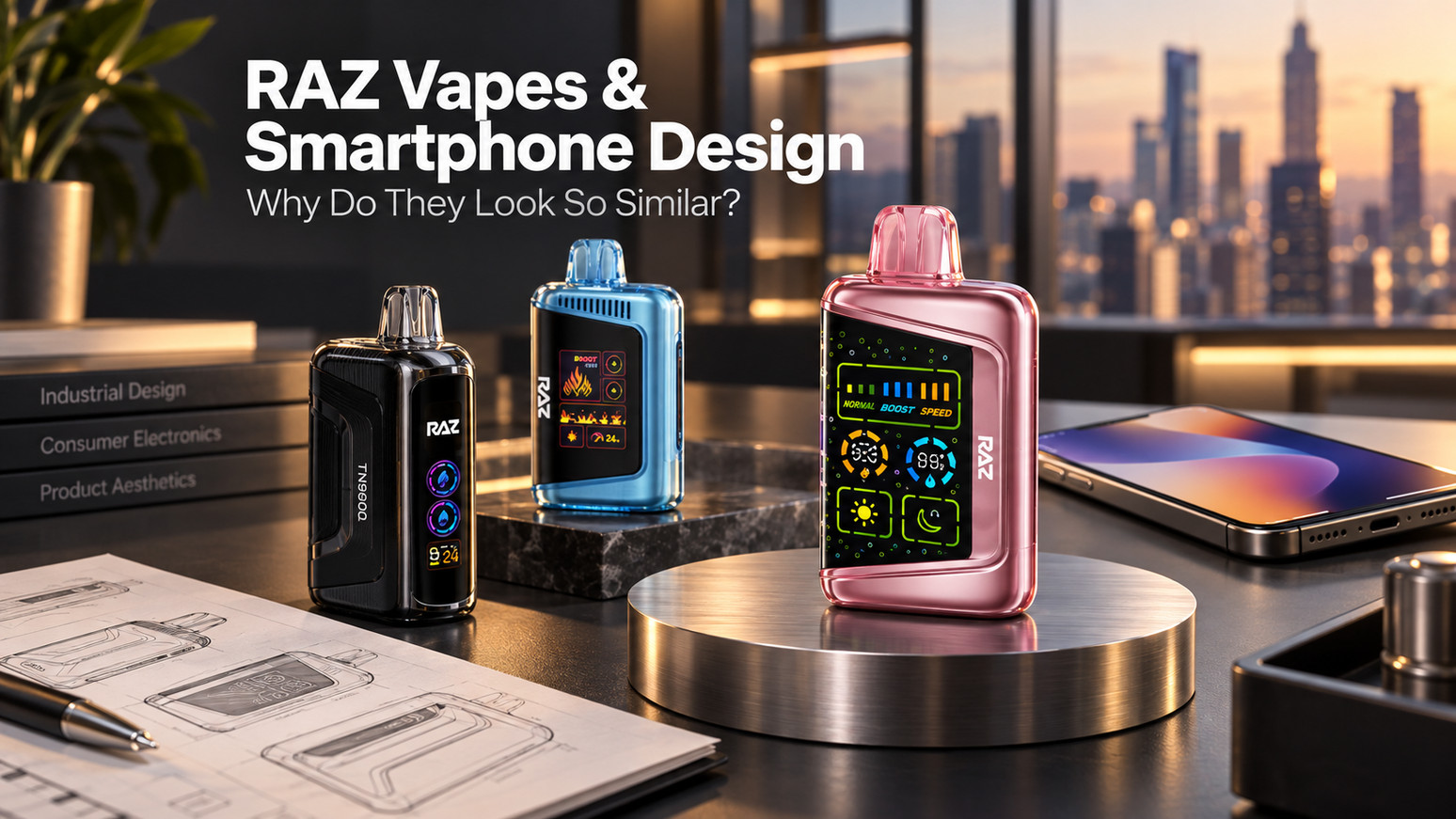
WARNING: This product contains nicotine. Nicotine is an addictive chemical. For adults 21+ only.
Written by Shop N Vape Editorial Team | Published October 13, 2026 | Approximately 7-minute read
Imagine placing a modern RAZ vape beside a small electronic gadget from fifteen years ago.
One has a colorful screen, a sculpted body, and a collection of tiny digital symbols. The other might be an early music player, a compact camera, or a miniature mobile phone.
At a glance, you might notice something surprising: they share a similar design language.
Not because they perform the same function, but because their designers use familiar ideas from the world of consumer electronics.
That's what makes RAZ vape design an interesting subject. Certain models have moved far beyond the plain cylindrical or rectangular appearance associated with earlier disposable electronic cigarettes.
Instead, their exterior design increasingly resembles the small digital devices people have carried for years.
So how did vape devices end up looking like mini smartphones?
Quick Answer: Some RAZ vapes resemble miniature smartphones because they combine compact rectangular bodies, prominent digital displays, graphical indicators, and carefully integrated controls. These elements are also familiar from phones, watches, and other consumer electronics. The resemblance is a visual design comparison, not evidence that RAZ devices have smartphone functions or connectivity.
Remember When Every Gadget Had Its Own Look?
There was a time when portable electronics were easy to identify from across a room.
A camera looked like a camera.
An MP3 player had its own unmistakable shape.
A mobile phone was usually designed around a keypad, display, and speaker.
Then screens became smaller, more affordable to integrate into everyday devices, and increasingly important to how products communicated information.
The result was a gradual blending of visual ideas across different product categories.
Watches gained digital interfaces. Kitchen appliances developed touch displays. Even compact personal electronics began to use screen designs associated with larger gadgets.
Modern vape devices became part of that broader visual trend.
Not every manufacturer followed the same direction, but RAZ provides several noticeable examples.
RAZ Vape Design: From Simple Bodies to Digital Faces
Look at different generations within the RAZ device collection.
The differences aren't limited to model names.
Some products have compact bodies with small display elements. Others have larger, curved screens that occupy a substantial portion of their exterior.
These design changes are especially noticeable when browsing the different generations available through an online vape shop.
A screen changes the visual balance of a small electronic device.
Instead of seeing only the casing, you see an interface.
The Screen Became Part of the Product's Personality
A screen can display information, but it also changes how an object looks when it is switched on.
Think about a smartwatch.
Even without checking the time, you can often recognize its visual style from the watch face, the arrangement of symbols, and the shape of the display.
Something similar happens with screen-equipped RAZ devices.
Their screens may show information related to battery status, liquid indicators, or selected operating modes, depending on the specific model.
But the display also creates a distinctive visual identity.
A curved display looks different from a narrow indicator strip.
A screen positioned along the side of a device looks different from one occupying the front.
That's why two products with similar basic functions can have noticeably different appearances.
Shop N Vape already has a smart-screen device guide explaining the technical role of these displays.
Here, the more interesting question is why screens have become such a visible part of product styling.
What Makes the RAZ RX 50K Look So Futuristic?
The RAZ RX 50K is a useful example because its exterior incorporates a curved digital display.
According to RAZ's published information, the model uses a three-dimensional HD screen with a multi-bar visual indicator.
That gives the display more visual presence than a small, single-color status light.
The screen follows the product's exterior styling, making it appear integrated into the device body.
A curved screen can also change the impression of the object itself.
It may make the housing look more sculptural or give the display greater prominence from certain viewing angles.
None of this means the product has the capabilities of a smartphone.
It's simply an example of how digital-screen aesthetics have spread into smaller electronic products.
Shop N Vape's RAZ RX 50K and Geek Bar Pulse X2 comparison discusses the actual model specifications.
Our subject is the appearance: why the device looks the way it does.
The Influence of Smartphone Design Is Bigger Than Screens
Here's something people sometimes overlook.
A product doesn't need a large display to look influenced by smartphone-era design.
There are other visual clues.
Rounded corners, contrasting surface materials, polished edges, and compact rectangular shapes have become familiar throughout consumer electronics.
These features can create a gadget-like appearance even when the product's function is unrelated to phones.
Think about wireless earbuds.
Their charging cases often borrow the same clean, carefully rounded styling found in modern electronics.
A portable battery pack may have a digital percentage indicator and smooth exterior panels.
Likewise, some newer vape devices use design elements that would not look out of place on another compact electronic product.
This is a visual comparison, not a claim that one manufacturer copied a particular phone.
Why Curved Screens Look Different From Flat Screens
Curved displays have an interesting effect on product photography.
From the front, a curved screen may appear almost flat.
From an angle, however, it can reveal more of the product's shape.
Light catches the screen differently. Reflections change. The housing can look more continuous.
These details matter in industrial design because the appearance of a three-dimensional object changes as the viewing angle changes.
RAZ models with curved displays illustrate that principle.
The exterior is not simply a box with a screen attached.
The casing and display are presented as parts of one overall design.
That may be why the product reminds someone of a miniature phone or another sophisticated pocket-sized gadget.
RAZ TN9000, LTX and RX: Different Visual Generations
RAZ hasn't used one identical exterior design for every release.
The TN9000, LTX 25K, and RX 50K are useful examples of distinct product families.
The TN9000 uses a compact design with its own digital display arrangement.
The LTX 25K has a different housing and display presentation.
The RX 50K takes a more prominent curved-screen approach.
These distinctions show that a manufacturer's visual identity can evolve without every generation becoming physically identical.
A brand can preserve familiar design ideas while experimenting with different screen placement, casing proportions, and surface treatments.
It's similar to the way a phone manufacturer might have several models with related branding but different exterior designs.
That doesn't make the products interchangeable.
It simply makes the family resemblance easier to notice.
For readers interested in an individual earlier model, Shop N Vape maintains a RAZ DC25000 product listing with its own product description and photographs.
Specific model pages are more reliable than assuming every RAZ product shares the same design.
Why Some Newer Devices Resemble Small Digital Accessories
The smartphone comparison is one part of a broader trend.
Many compact electronics now share a few visual characteristics: simple silhouettes, integrated screens, carefully finished surfaces, and small graphical interfaces.
These choices can make very different objects look as though they belong to the same era of technology.
A digital camera, portable audio player, smartwatch charger, and small battery-powered accessory might share similar design features.
RAZ's newer screen-equipped products fit within that general visual landscape.
The resemblance isn't proof of a direct design influence from any single device.
Rather, it reflects how certain styling conventions have become familiar across consumer electronics.
Is the Screen More Important Than the Shape?
From a visual-design perspective, the answer depends on the model.
A screen may dominate the appearance of one device.
On another, the overall body shape might be more distinctive.
Color can also affect the impression.
A dark display set into a bright casing creates a different visual balance from a display surrounded by similarly dark materials.
That doesn't tell us whether one design is technically superior.
It simply illustrates how several small choices work together to establish a recognizable appearance.
Why a RAZ Isn't Actually a Mini Smartphone
Despite the resemblance, these devices belong to entirely different product categories.
A smartphone is a general-purpose computing and communications device, typically equipped with an operating system, applications, network connectivity, and multiple communication functions.
A RAZ vape is an electronic nicotine-delivery product.
Its display, where fitted, is designed around information associated with that particular device.
A colorful screen does not mean the product can make calls, install applications, access the internet, or perform other smartphone functions.
That's worth emphasizing because appearance and capability are not the same thing.
A device can borrow familiar styling from consumer electronics without sharing their functions.
A Familiar Look Doesn't Mean Every Model Is the Same
As products become more visually complex, accurate model identification becomes important.
Two RAZ devices may have displays but use different exterior shapes.
One may have a screen along the front, while another features a more pronounced curved display.
The best way to describe a particular device is to identify its full model name and compare it with the manufacturer's documentation.
The same is true of product photography.
An image showing one RAZ generation shouldn't be used as though it represents every generation.
Good visual documentation helps keep the product history clear.
What Does This Tell Us About Modern Product Design?
Perhaps the most interesting part of this story is how normal the smartphone aesthetic has become.
People are accustomed to digital screens on objects that once had no displays at all.
A thermostat can resemble a miniature tablet.
A smartwatch can look like a tiny phone.
A home appliance can have a colorful interface.
And certain vape devices can resemble pocket-sized digital accessories.
These products have different functions, but their designers draw from a broader collection of familiar visual ideas.
RAZ is one example of this shift.
Its different product families show how digital displays, exterior proportions, and graphical presentation can shape the identity of a small electronic device.
Frequently Asked Questions
Why do RAZ vapes look like small smartphones?
Some RAZ models use prominent screens, curved housings, and graphical interfaces that resemble styling conventions found in modern portable electronics.
Do RAZ vapes have smartphone features?
A smartphone-like appearance does not indicate calling, app installation, internet access, or smartphone operating-system functions.
Which RAZ model has a curved screen?
The RAZ RX 50K is among the models identified by the manufacturer as having a curved HD display.
Do all RAZ devices have the same screen?
No. Different RAZ families use different display designs and arrangements.
Is the RAZ TN9000 shaped like the RX 50K?
They are distinct product families with different exterior designs. They should not be treated as physically identical.
Does a larger display make a device more advanced?
Screen size alone is not a reliable measure of technical capability, reliability, or product quality.
Is RAZ the only manufacturer using digital screens?
No. Other electronic-cigarette manufacturers have also introduced products with digital displays.
Are screens on vape devices the same as phone touchscreens?
No. Display technology and user-interface functions vary by device. A screen should not be assumed to be touch-sensitive unless the manufacturer specifies that capability.
When a Small Device Starts Looking Like a Big Idea
The resemblance between certain RAZ vapes and miniature smartphones says something interesting about modern product design.
Digital displays, rounded edges, and compact electronic interfaces have become familiar across many industries.
RAZ's different generations show how those visual ideas can appear in electronic-cigarette products, too.
The screens and shapes may look increasingly sophisticated, but their appearance shouldn't be confused with smartphone functionality—or treated as evidence of superior product performance.
Sometimes a simple design question reveals a much larger story about how everyday technology has changed.
Shop N Vape Editorial Team
Published by Shop N Vape, providing educational articles about electronic-device design, manufacturer histories, and product terminology for adults aged 21 and older.
Explore Popular Articles
Why Do NEXA Vapes Have Different Display Styles? ULTRA II & PIX Explained
WARNING: This product contains nicotine. Nicotine is an addictive chemical. For adults 21+ only. Wri...

Why Do RAZ Vapes Look Like Mini Smartphones?
WARNING: This product contains nicotine. Nicotine is an addictive chemical. For adults 21+ only. Wri...

Ordered a Geek Bar? What Processing, Shipped & Delivered Really Mean
WARNING: This product contains nicotine. Nicotine is an addictive chemical. For adults 21+ only. Wri...

What Makes a Good Online Disposable Vape Shop?
WARNING: This product contains nicotine. Nicotine is an addictive chemical. For adults 21+ only. Wri...